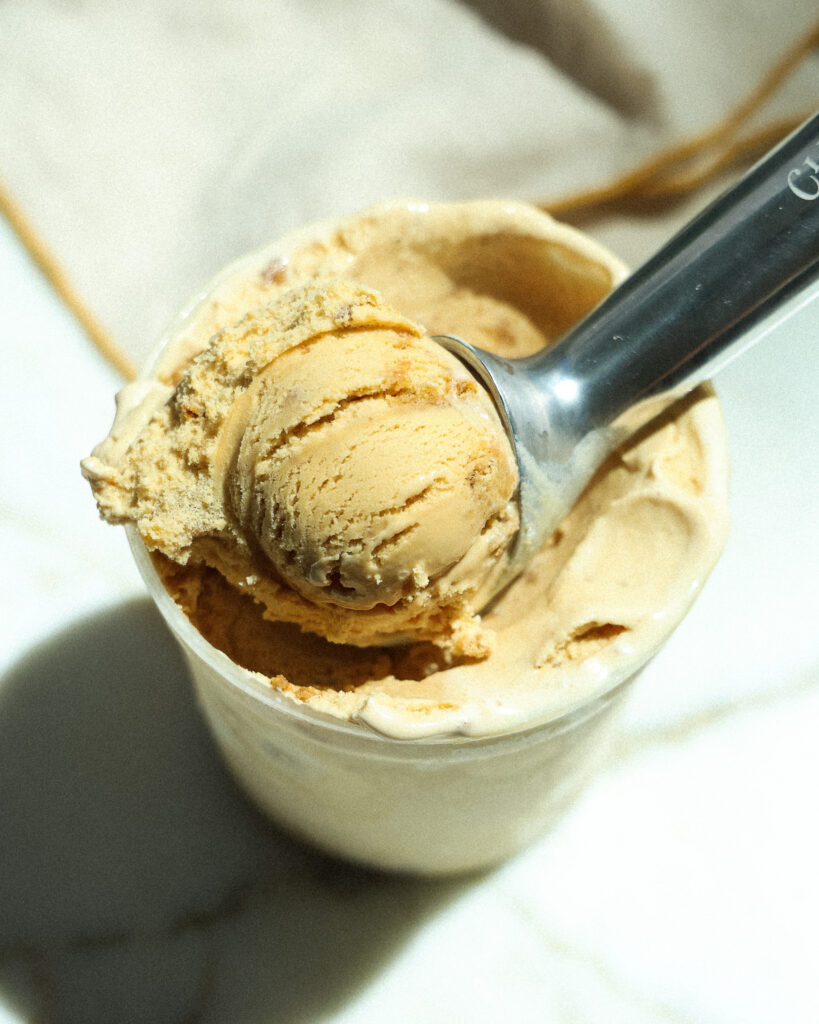
I have a bone to pick with the KitchenAid company. While I love their ice cream attachment, I was looking up how to make ice cream with a stand mixer, and their website had NO RECIPE MEASUREMENTS. In that case, what’s a girl to do? How was I supposed to know the amount of cream, milk, and eggs to use so I wouldn’t overwhelm my stand mixer? So of course, using my ice cream background and knowledge, I decided to take testing into my own hands.
If you are looking for an ice cream recipe to make in your stand mixer, you have found the right place. This ice cream recipe fits perfectly into the KitchenAid ice cream
attachment, is simple to make, and freezes perfectly into a 9 x 5-inch loaf pan. Not only is this the creamiest, smoothest ice cream recipe, it’s also classically French (we’ll get to that later), and supremely rich and delicious. This is your ultimate guide to making at-home ice cream in a stand mixer.
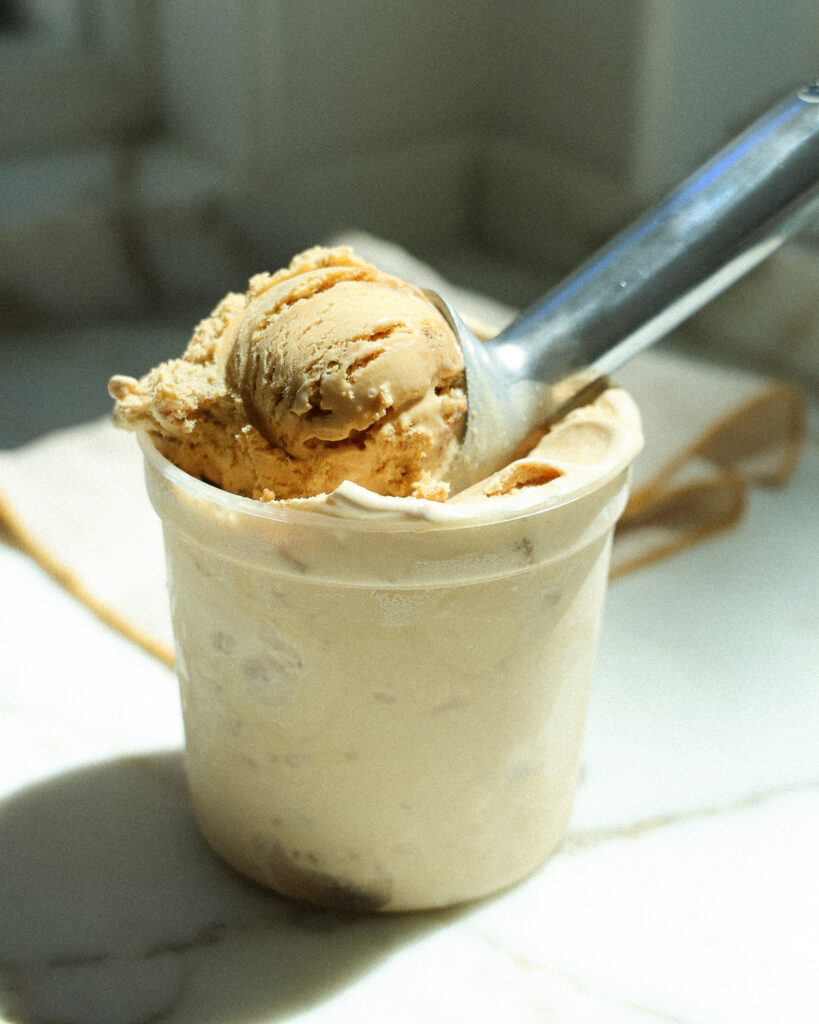
Table of contents
- Where can I get a KitchenAid ice cream maker attachment?
- Ingredients to make homemade ice cream
- What are eggs doing in this ice cream base?
- What is a crème anglaise?
- How to make homemade ice cream using the KitchenAid ice cream attachment
- Do I need to strain out my ice cream base?
- Mix-in suggestions
- Serving suggestions
- Things to know when using a KitchenAid ice cream attachment
- Tips for making ice cream at home
- How to store homemade ice cream
- Watch the recipe here
- Looking for ice cream recipes?
Where can I get a KitchenAid ice cream maker attachment?
The easiest place to find one is online through KitchenAid, or at retailers like Target, Williams Sonoma, or Crate & Barrel. They usually run around $120, which feels like a lot upfront, but it’s still cheaper than most standalone ice cream machines and it doesn’t take up nearly as much space in your kitchen.
Ingredients to make homemade ice cream
When you are making ice cream, you are essentially whipping a crème anglaise. Here are the ingredients you will need to make the ice cream base:
- 4 large egg yolks
- 1/2 cup (110g) granulated sugar, divided
- 1 1/2 cups (360g) whole milk
- 1 1/2 cups (360g) heavy cream
- 1 teaspoon vanilla bean paste or vanilla extract
- Additional mix-ins of your choice, up to 16 ounces
What are eggs doing in this ice cream base?
Eggs are an important stabilizer in ice cream. They make it so that instead of just eating frozen and whipped condensed milk (which happens in some no-churn recipes!), you get a creamy, fluffy, but still smooth and rich, ice cream base. The eggs form a custard, which thickens the ice cream base and gives you rich and smooth ice cream as a result.
You’ll see many high-quality ice creams (Haagen Dazs, most famously) have egg yolks listed in their ingredients. Other recipes rely on xanthan gum as a stabilizer, but since that ingredient is harder to find, I prefer using egg yolks in my ice cream base.
What is a crème anglaise?
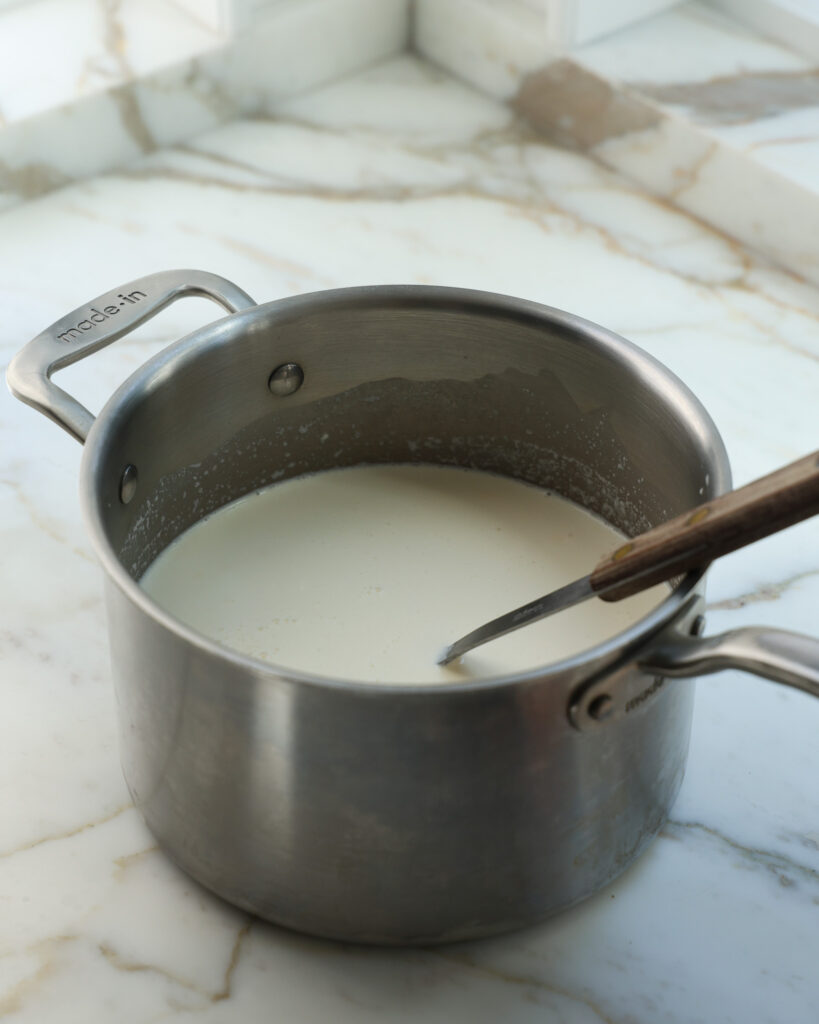
A crème anglaise is a French custard sauce used in desserts. It’s essentially the custard we are making here. But what’s surprising is many don’t realize that a crème anglaise also doubles as a classic vanilla ice cream base, since the ingredients are nearly identical.
In this recipe we are quickly making the crème anglaise base, then allowing it to chill for 12 hours before churning it in the ice cream maker. From there, it gives you a rich vanilla ice cream base. Perfect for any KitchenAid Stand Mixer ice cream!
How to make homemade ice cream using the KitchenAid ice cream attachment
- Place your KitchenAid Ice Cream attachment in the back of the freezer to chill for 14-16 hours. (See Note)
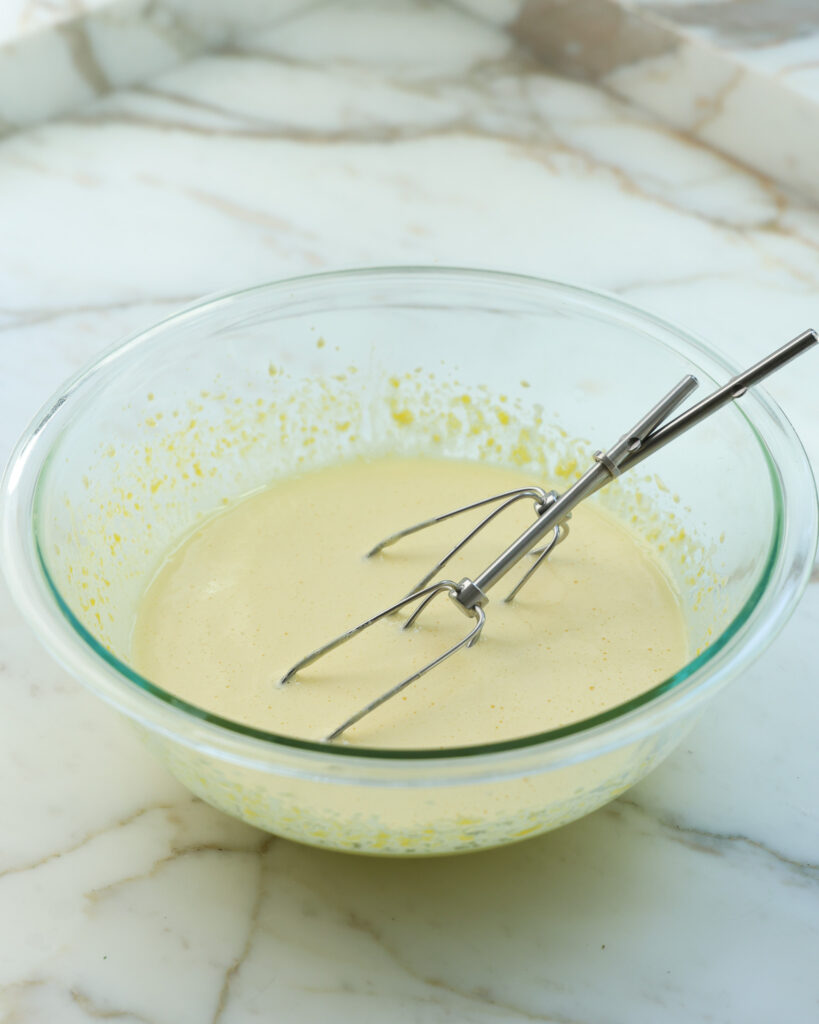
- In a medium bowl, whisk together 4 egg yolks and 55 grams of granulated sugar until the egg yolks are lightened to a pale yellow color. You should be able to pull up your whisk and see the yolk mixture fall down into the bowl in a “ribbon,” and that’s when the mixture is ready.
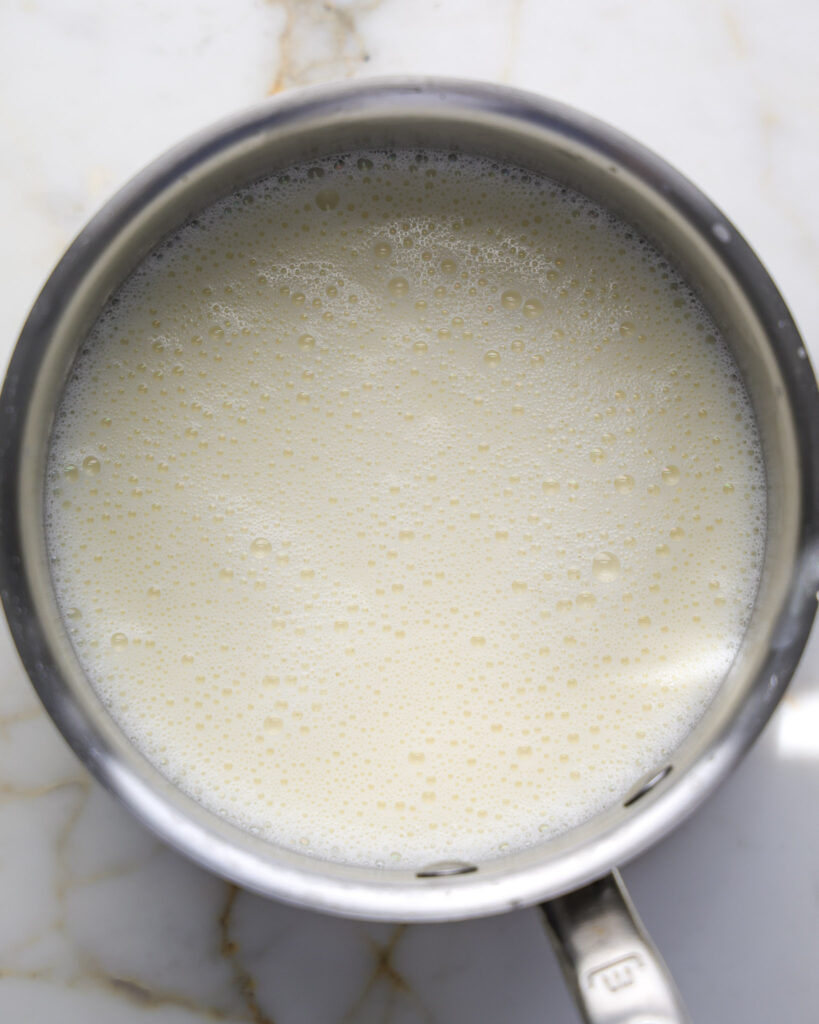
- In a medium sauce pot, add 360 grams of whole milk, 360 grams of heavy cream, the remaining 55 grams of sugar, and 1 teaspoon of vanilla bean paste. Stir to combine and place over medium heat. Stirring often, let this heat up until foamy or until it reads 165°F with an instant-read thermometer.
- Reduce the heat to low and scoop a spoonful (about 1/4 cup) of the hot milk mixture into the egg yolks. Whisk it into the yolks to temper them. Do this three more times to heat up the yolks. Then pour the egg yolk mixture directly into the pot.
- Stirring constantly, increase the heat to medium-low and mix the custard until it can coat the back of a spoon and reads 170°F on an instant-read thermometer.
- Strain the mixture through a mesh sieve into a bowl. To prevent a film from forming, directly place cling wrap on the surface of the mixture to seal it. Cover the bowl and chill in either the freezer for 2 hours or in the fridge for 12-16 hours. If you’re storing it in the freezer, check halfway through to ensure it didn’t solidify.
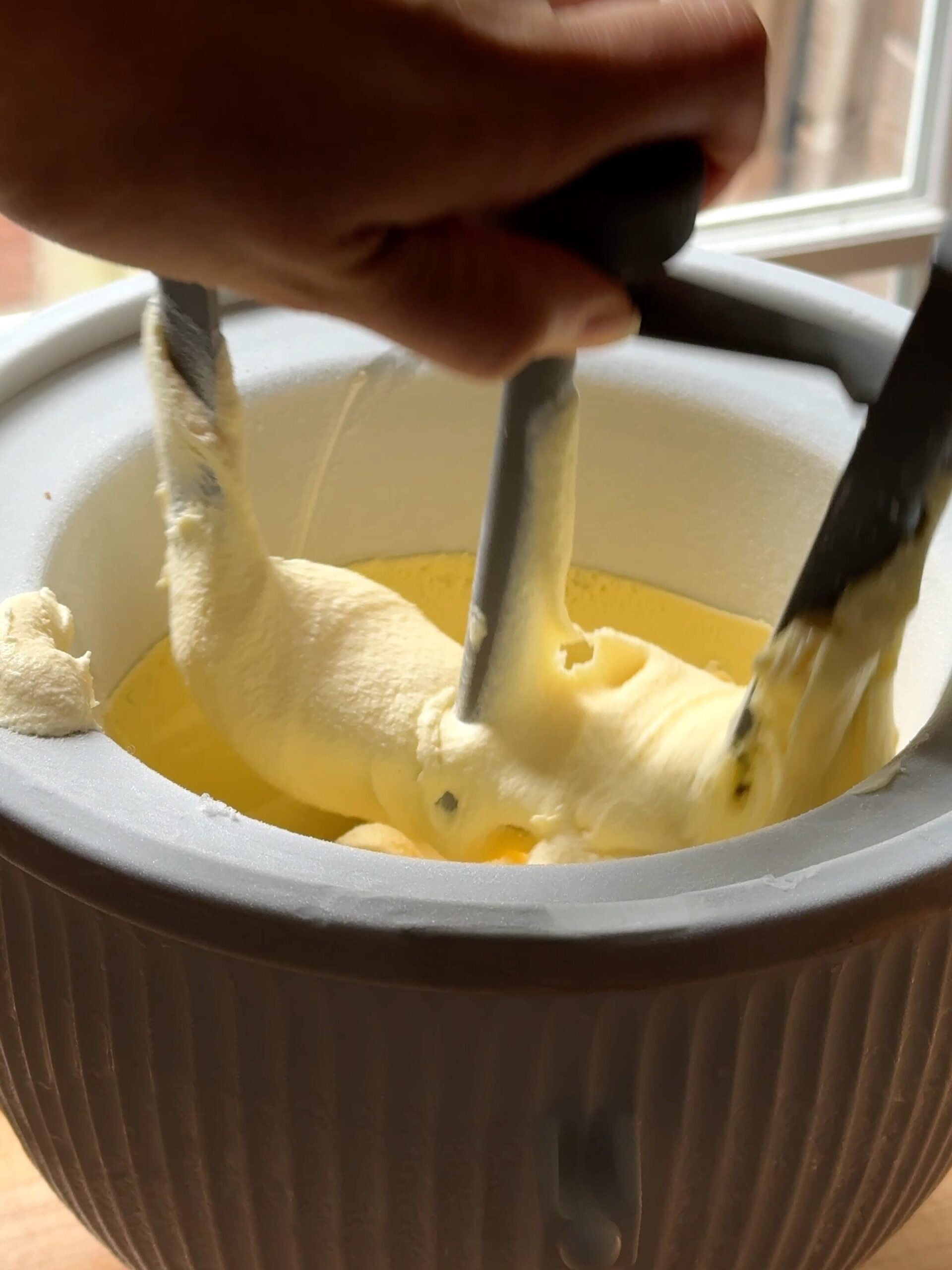
- When you are ready to churn, take the frozen KitchenAid attachment out of the freezer and pour in the custard. Churn on the stir setting for 20-30 minutes, or until the ice cream is thick and the texture of soft serve.
- Gently fold in your desired mix-ins and pour the ice cream into a 9-inch by 5-inch loaf pan.
- Cover and freeze another 2-3 hours for a firm scoop, and serve!
Do I need to strain out my ice cream base?
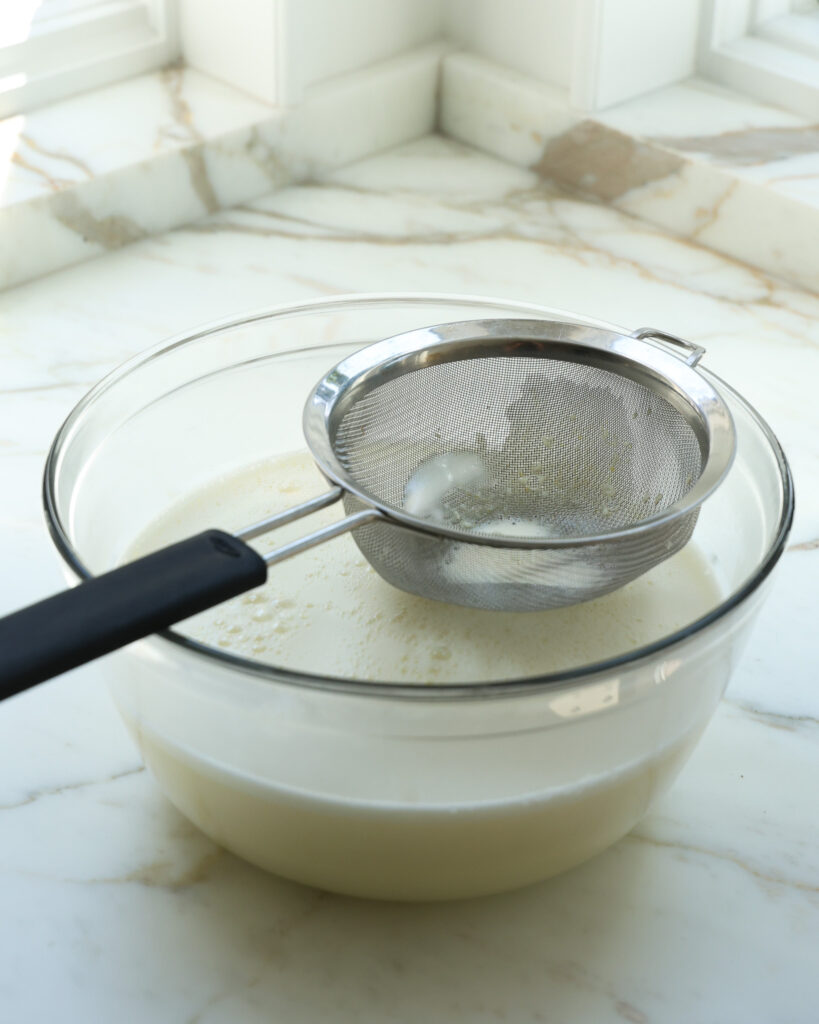
The short answer: yes. There can be some flecks of custard at the bottom of your bowl. To make sure you get the smoothest ice cream possible, it is best to strain the ice cream through a fine mesh sieve into the bowl that you will be storing it in.
Mix-in suggestions
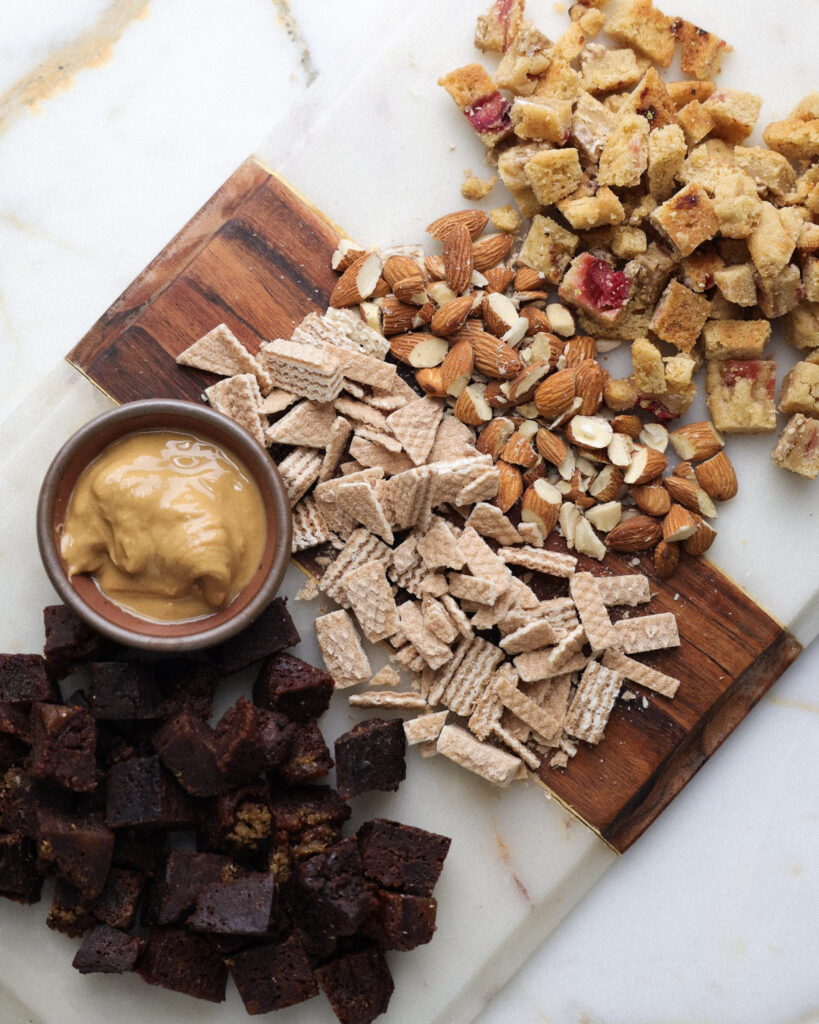
Honestly, whatever you can think of, can probably be mixed in! A few of my favorite mix-ins are:
- Cookie dough (obviously)
- Wafer cookies
- Brownie pieces
- Brownie batter (that’s been allowed to sit in the fridge to thicken!)
- Sprinkles
- Pretzels
- Peanut butter cups
- Crushed graham crackers
- Shortbread cookie crumbles
- Orange zest (for an elevated feel)
- Fudge chunks or chopped chocolate bars
- Waffle cone pieces
You can also add some caramel, peanut butter, fudge sauce, or even jams. Just make sure anything liquid-ish is added at the very end so it doesn’t mess with the texture.
Honestly, there’s no wrong answer here – just don’t overdo it or you’ll lose the ice cream in the mix-ins, which defeats the whole point.
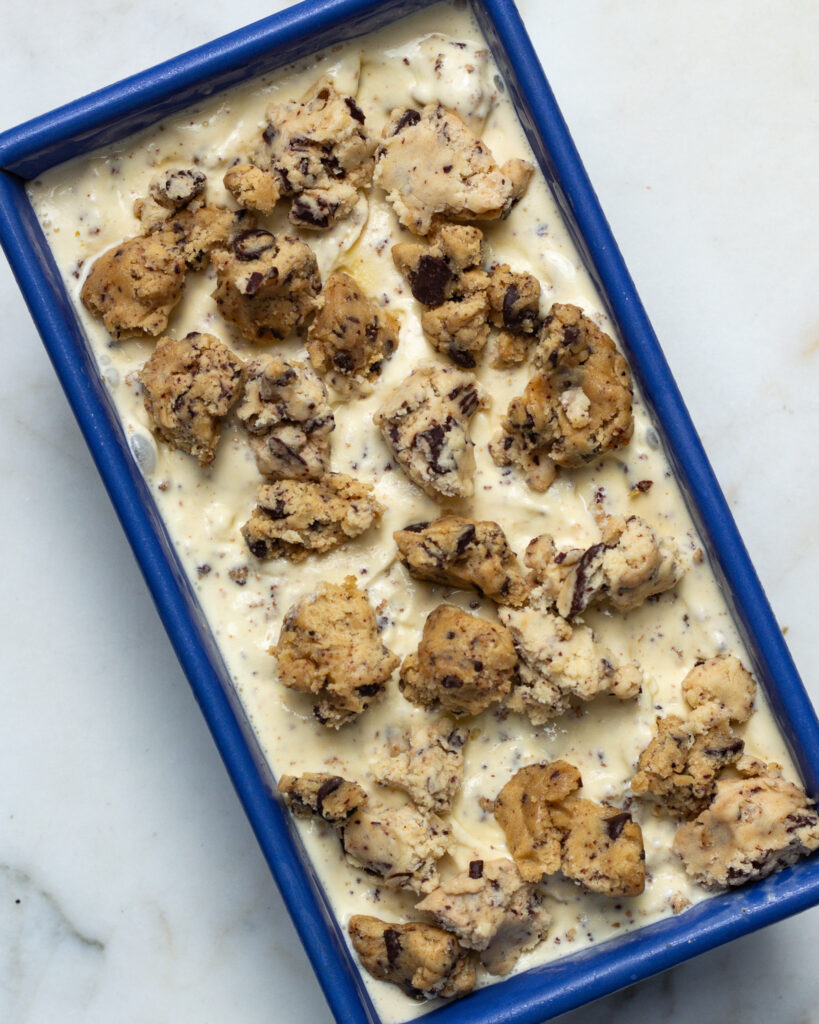
Serving suggestions
Serve this vanilla ice cream on cones, in a dish, drizzled with chocolate sauce or with a dollop of whipped cream.
Or, use it to stuff between two cookies to make ice cream sandwiches (like a chipwhich only so much better) or to make a chocolate milkshake.
Things to know when using a KitchenAid ice cream attachment
Here are a few tips I wish I knew before I started using my KitchenAid ice cream attachment:
- You can’t skip the freezing time – When they say 14-16 hours, they MEAN it. I’ve tried using it with less freezing time, and my KitchenAid bowl wasn’t cold enough to get the ice cream to that soft-serve texture I wanted.
- The attachment doesn’t lock in, it just lightly holds the ice cream tool – This took me by surprise, but the ice cream paddle itself doesn’t “lock” into the KitchenAid. It just lightly suspends on the attachment, making it so that the ice cream bowl holds it in place. I was first taken aback by this, but found it helpful as I added mix-ins to the bowl.
- Your ice cream can finish in 20 minutes, but the longer you mix, the better – The stiffer you can get your ice cream before you freeze it, the more air your ice cream will have. This will make sure you get a more classic, creamy ice cream texture, as opposed to the dense texture you get when you don’t churn ice cream long enough. Try to churn for a minimum of 25 minutes if you can!
- Don’t add your mix-ins to the mixer while it is churning – Other ice cream machines can handle this, but I noticed the KitchenAid attachment just ends up wanting to kick your toppings out. It also makes it harder for the ice cream to churn well. Add your fillings at the end!
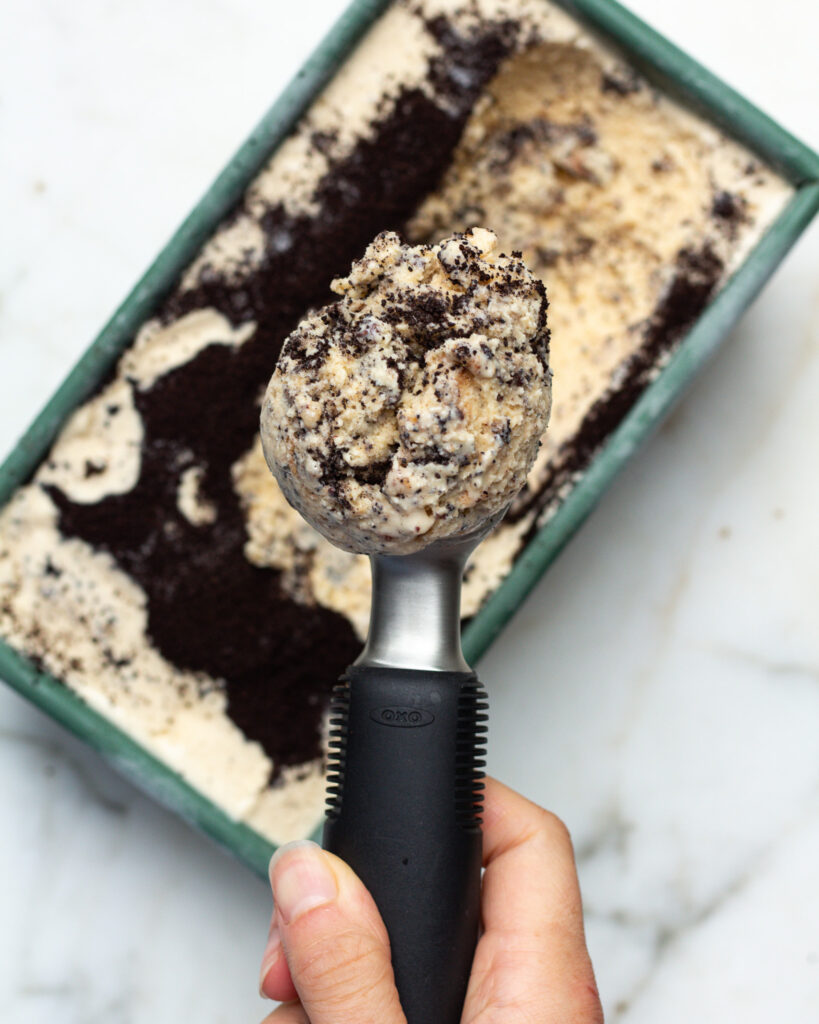
Tips for making ice cream at home
And here are a few tips I learned along the way!
Gently stir in your fillings, and try to keep as much air in the ice cream as possible. Once the churning is done, you want to keep your ice cream in that “churned” state for as long as possible. Any mixing, pressing, or fussing will take away some of the texture you worked so hard for! So when adding your mix-ins, just do a few big mixes, then quickly transfer it to the loaf pan you are freezing it in.
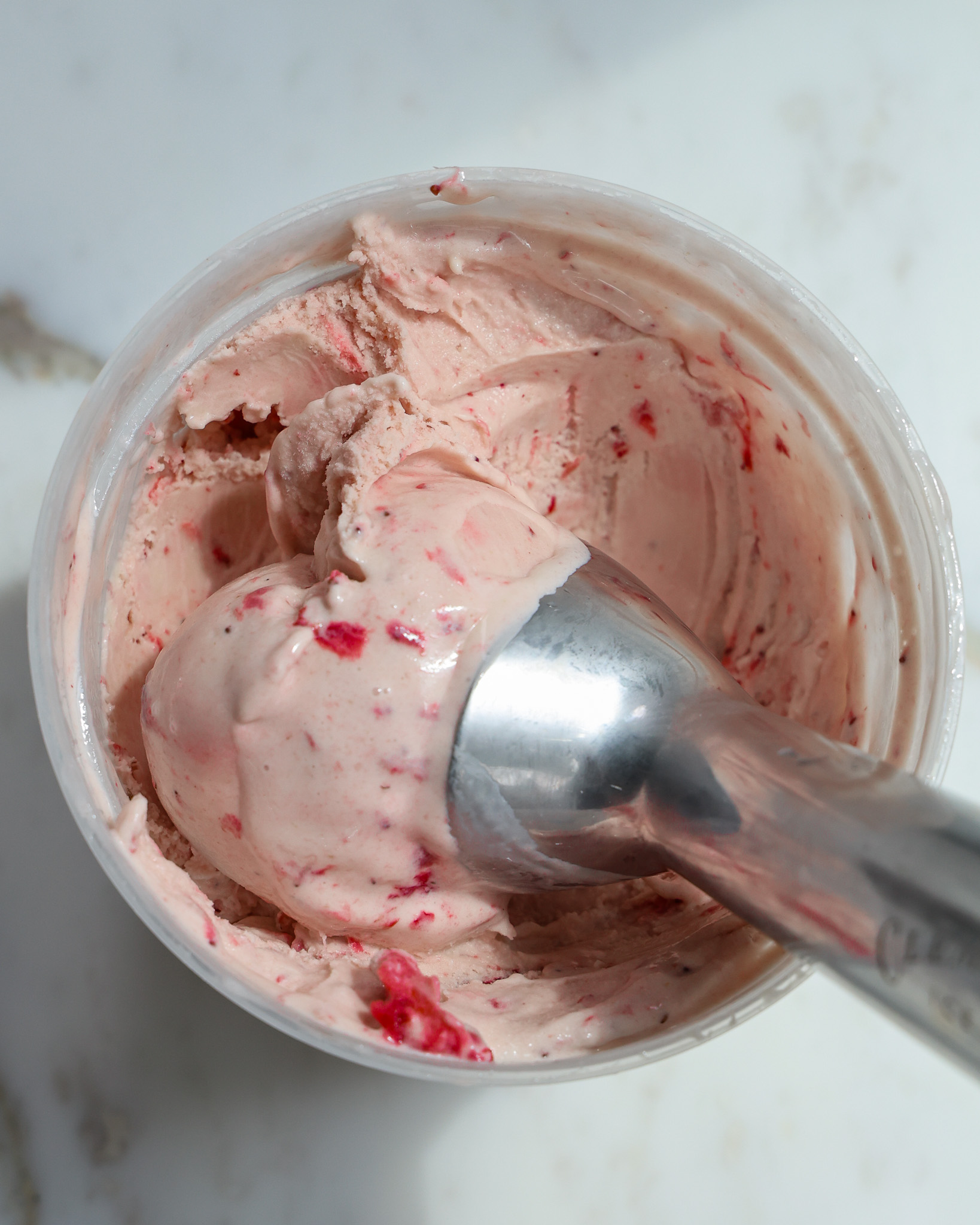
To make other flavors like chocolate, peppermint, or anything that involves a syrup or extract, add those while the ice cream is churning. For any flavors that involve a filling, like strawberry or cookie dough, add those at the end.
To store your ice cream, cover it in cling wrap and freeze for 2-3 hours. This is when it will be prime for scooping (see below). Any longer and it will be tougher to scoop — think of it like that really, really frozen ice cream you buy at the store!
Homemade ice cream typically keeps for 6 months in the freezer, but I hope yours will be gone long before then!
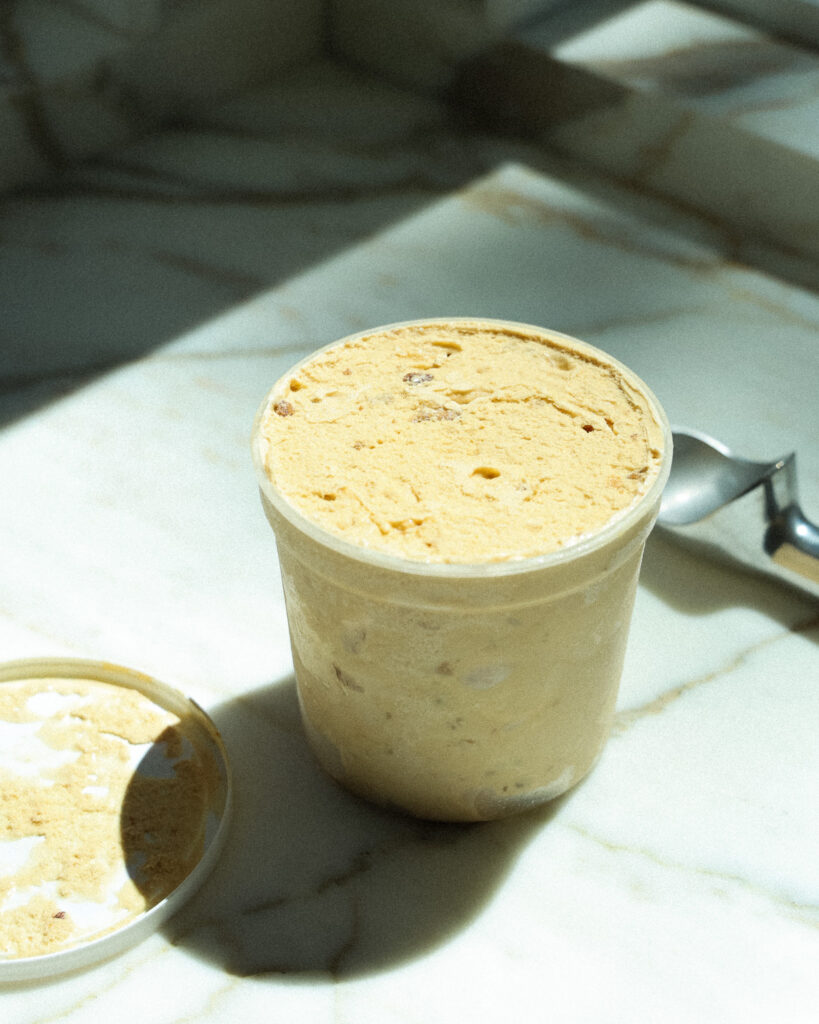
How to store homemade ice cream
Homemade ice cream will keep well in the freezer for up to 6 months. Store it in an airtight container, and press a piece of plastic wrap or parchment directly on the surface before sealing the lid – this helps prevent ice crystals from forming. Realistically though, this is not the kind of thing that lasts very long.
Why is this recipe in grams?
Grams keep ice cream recipes precise, which really matters for getting a smooth, creamy texture. Measuring by volume can vary a lot, but weighing everything makes the base consistent every time.
I want to ensure you get the best results with this recipe (and I want to keep this recipe foolproof!) so I highly recommend getting a small affordable kitchen scale if you want to move forward with this particular recipe.
Watch the recipe here
The video may not fully represent the recipe. For best results, follow the instructions as written.
Looking for ice cream recipes?
Here are a few of my favorites!
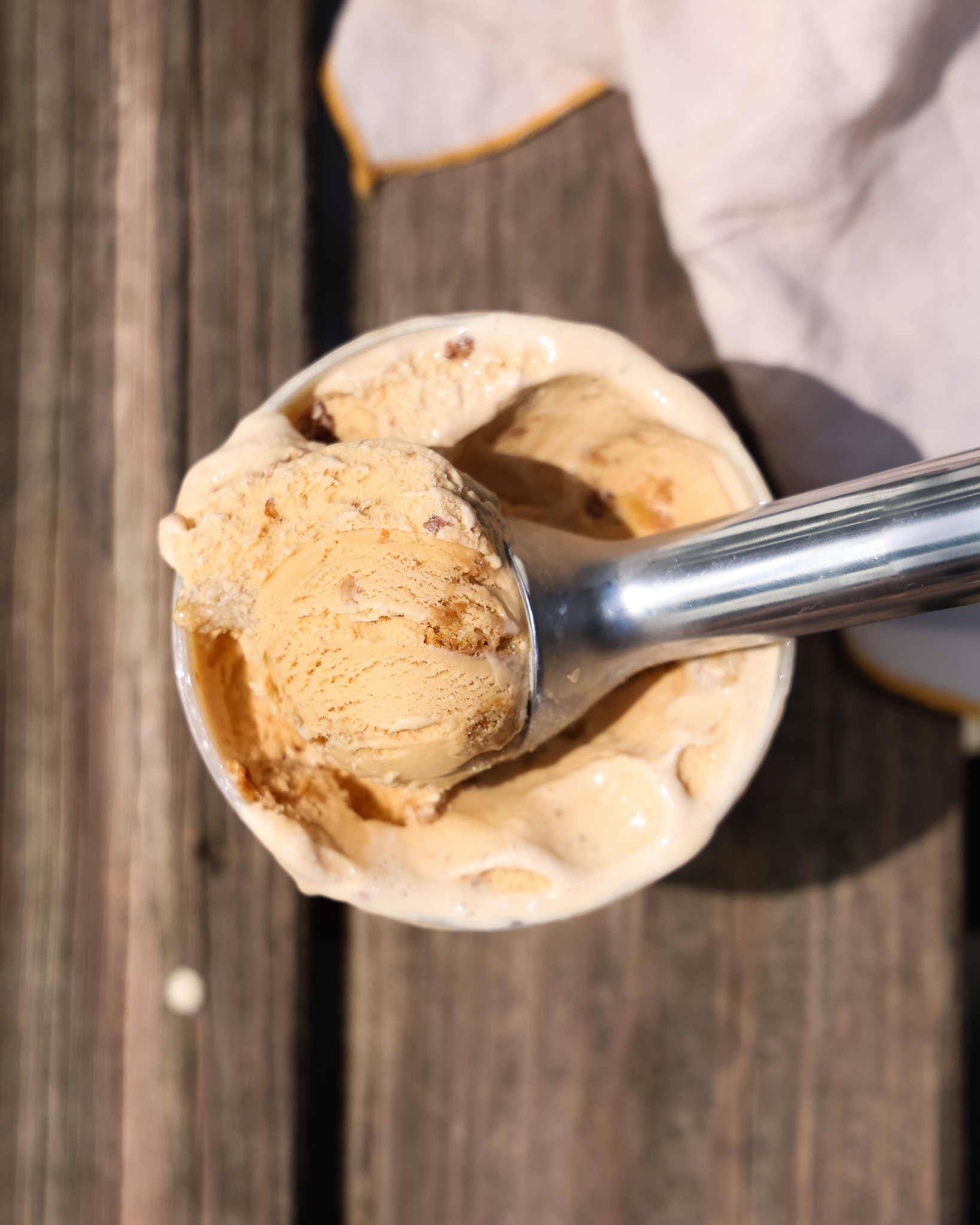
Brown Butter Ice Cream
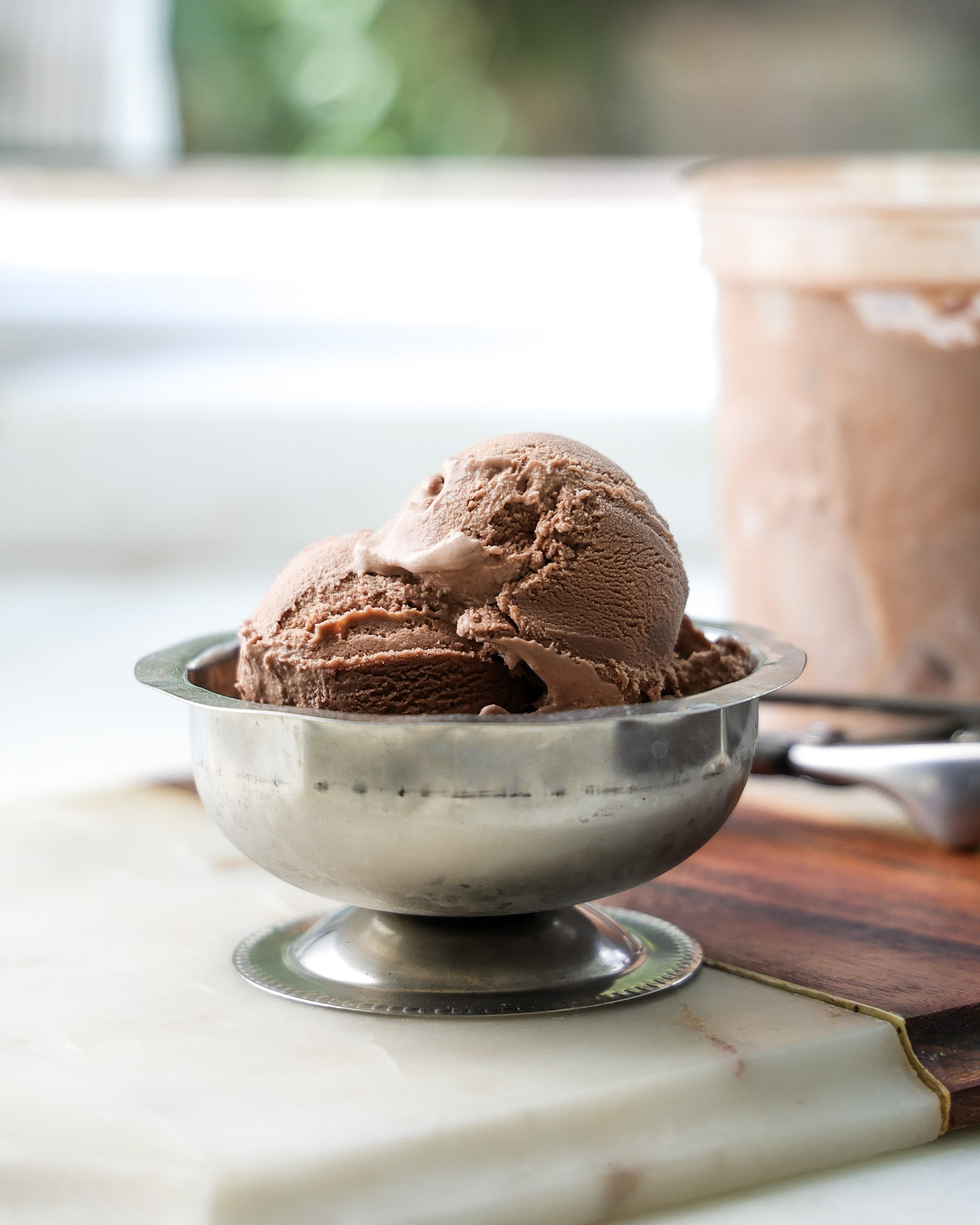
How to Make Chocolate Ice Cream with the KitchenAid Ice Cream Attachment
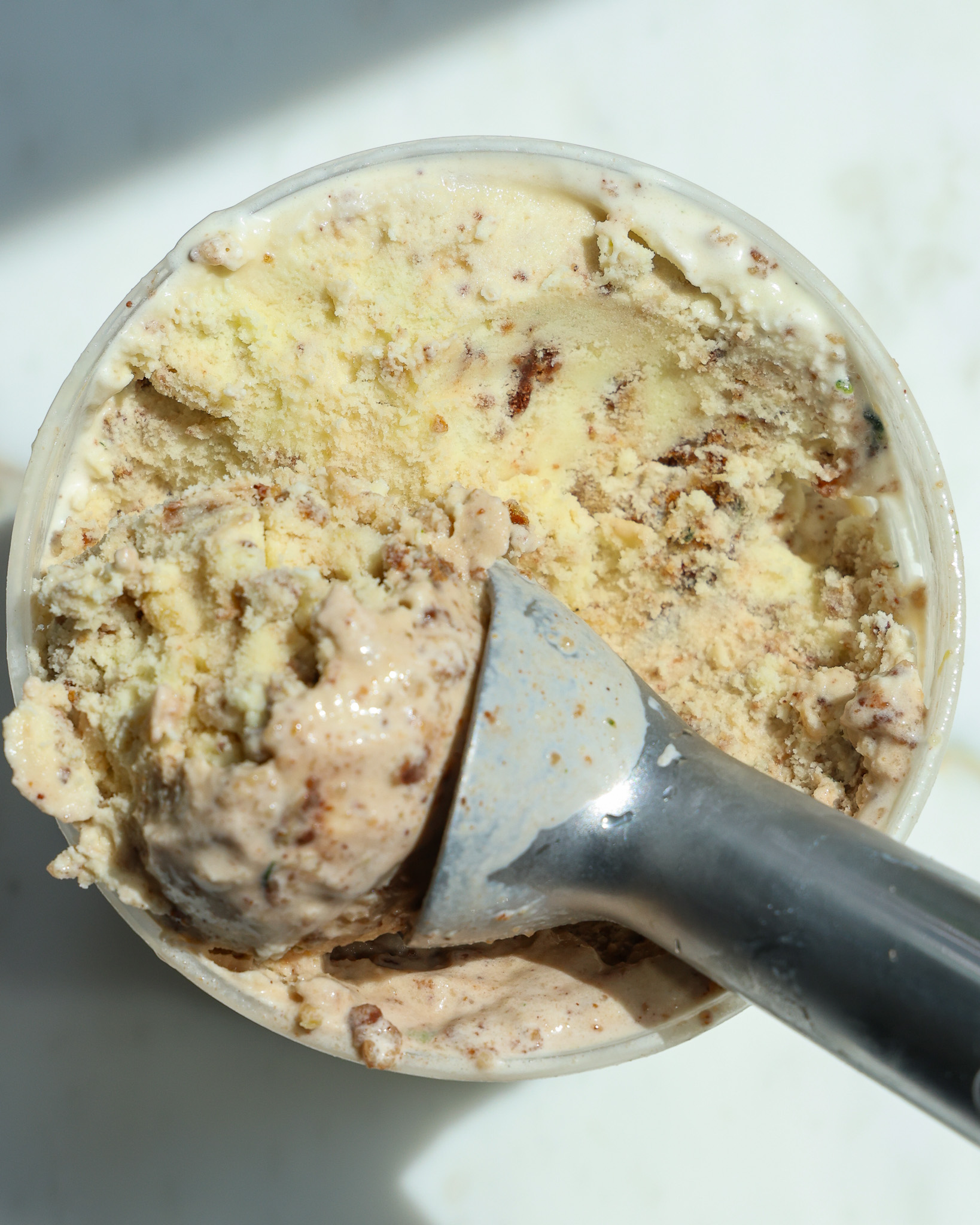
Zucchini Bread Ice Cream
And that’s it for how to make ice cream with a KitchenAid attachment! If you have one at home, I hope this was helpful for you.
If you make it, please tag me on Pinterest or Instagram so I can see! It’s my favorite thing to scroll through stories and see what you all are making.
And of course, feel free to leave any questions, comments, or reviews! This is the best place to reach me, and I’d love to hear from you <3
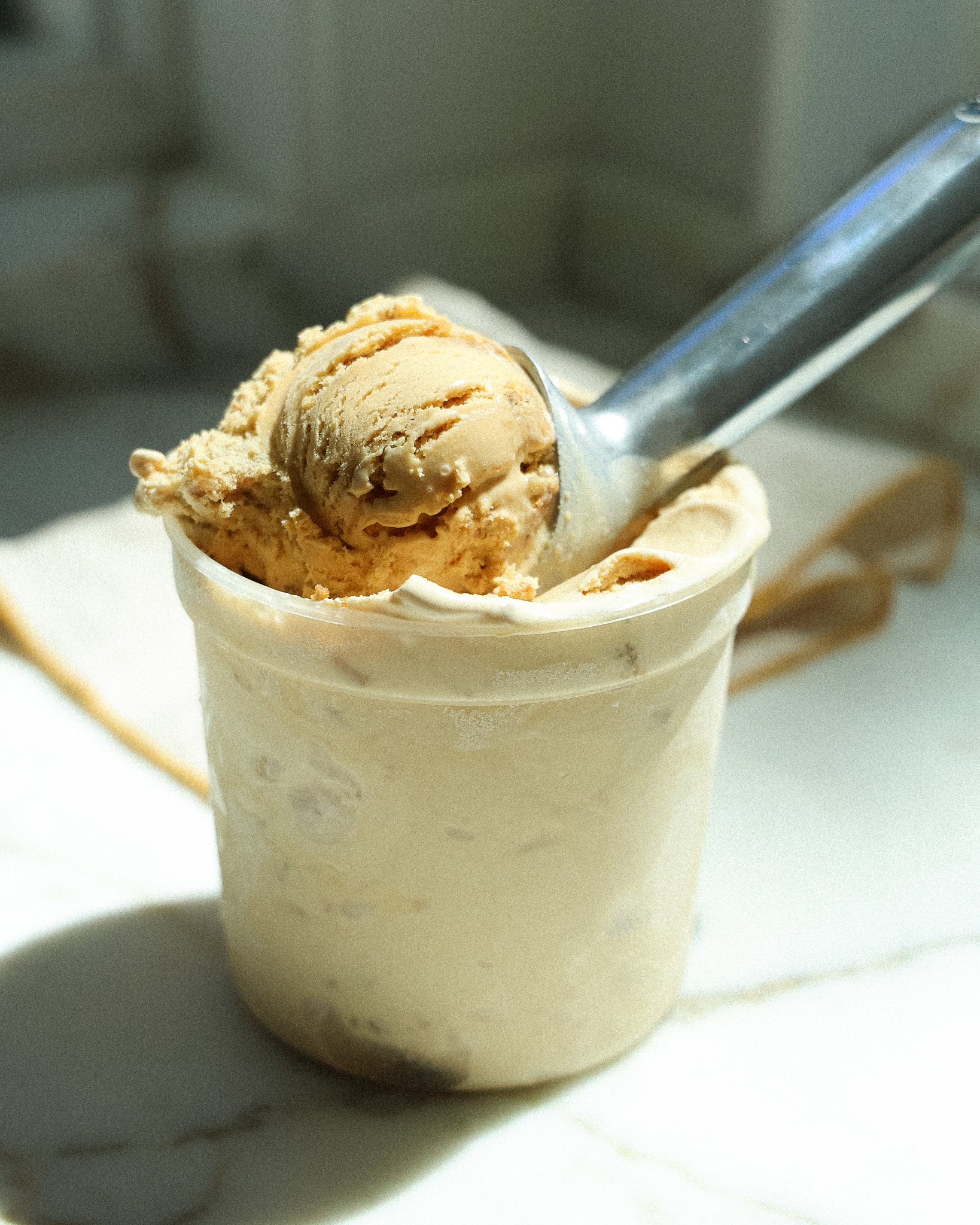
Equipment
- 1 whisk
- 1 medium bowl
- 1 Seran wrap optional
- 1 spatula
- 1 9×5' baking dish or any pan suitable for freezing the ice cream
Ingredients
- 4 large egg yolks
- 1/2 cup (110g) granulated sugar, divided
- 1 1/2 cups (360g) whole milk
- 1 1/2 cups (360g) heavy cream
- 1 teaspoon vanilla bean paste or vanilla extract
- Additional mix-ins of your choice, up to 16 ounces
Instructions
- Place your KitchenAid Ice Cream attachment in the back of the freezer to chill for 14-16 hours. (See Note)
- In a medium bowl, whisk together 4 egg yolks and 55 grams of granulated sugar until the egg yolks are lightened to a pale yellow color. You should be able to pull up your whisk and see the yolk mixture fall down into the bowl in a "ribbon," and that's when the mixture is ready.
- In a medium sauce pot, add 360 grams of whole milk, 360 grams of heavy cream, the remaining 55 grams of sugar, and 1 teaspoon of vanilla bean paste. Stir to combine and place over medium heat. Stirring often, let this heat up until foamy or until it reads 165°F with an instant-read thermometer.
- Reduce the heat to low and scoop a spoonful (about 1/4 cup) of the hot milk mixture into the egg yolks. Whisk it into the yolks to temper them. Do this three more times to heat up the yolks. Then pour the egg yolk mixture directly into the pot.
- Stirring constantly, increase the heat to medium-low and mix the custard until it can coat the back of a spoon and reads 170°F on an instant-read thermometer.
- Strain the custard through a mesh sieve into a bowl. To prevent a film from forming, directly place cling wrap on the surface to seal it. Cover the bowl and store in the freezer for 2 hours or the fridge for 12-16 hours to chill. If you're storing it in the freezer, check halfway through to ensure it didn't solidify.
- When you are ready to churn, take the frozen KitchenAid attachment out of the freezer and pour in the custard. Churn on the stir setting for 20-30 minutes, or until the ice cream is thick and the texture of soft serve.
- Gently fold in your desired mix-ins and pour the ice cream into a 9 by 5-inch loaf pan.
- Cover and freeze another 2-3 hours for a firm scoop, and serve!
Comments
Especially love the Kitchenaid ice cream maker hints. Thank you!
You are so welcome!
I found this recipe on YouTube and it is AMAZING! I was so intimidated to use my kitchenaid ice cream attachment but you gave me the confidence to try and it will absolutely be a staple this summer! The recipe is so easy to follow and comes out perfect!
Omg I’m so happy to hear that and so glad you loved it!
This recipe is perfection. I increased the vanilla bean paste to 2 teaspoons and added 1/2 cup fresh brewed espresso to the hot custard.
After freezing I layered in 1 package crushed Trader Joe’s toffee chips and 1 jar of Trader Joe’s caramel sauce.
Best ice cream ever! ⭐️⭐️⭐️⭐️⭐️
I’m so glad you loved it! The toffee and caramel sauce sound exquisite.
Leave a Comment
Made this recipe? Tell me all your thoughts or if you’ve got any questions!